
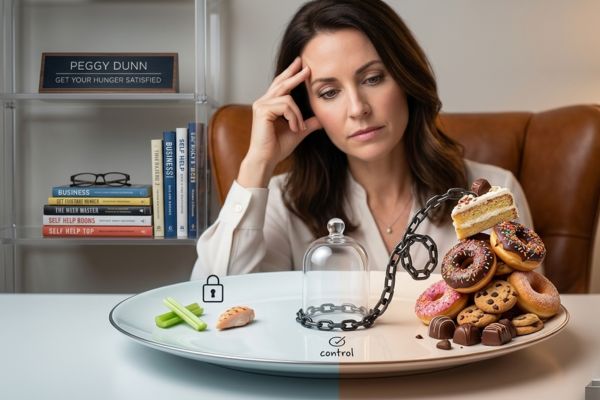
Binge Eating Cycle After Restriction: Why Control Around Food Often Leads to Overeating
Binge eating rarely starts with overeating.
It often starts with restriction.
At first, restriction feels like control. It feels structured, disciplined, and “healthy.” Food rules create a sense of order, especially for women who feel overwhelmed in other areas of life.
But underneath that control, something begins to build.
Physiological pressure.
Mental obsession.
Emotional deprivation.
The more food is restricted, the more the brain perceives scarcity.
And scarcity creates urgency.
Eventually, the mind and body respond with a rebound effect—an overwhelming drive to eat, often beyond physical hunger.
This is where binge eating often begins.
Not from weakness, but from biological and emotional response to deprivation.
The binge is not random. It is a reaction to prolonged restriction—whether physical, emotional, or psychological.
After the binge, guilt enters. And guilt often leads back to more restriction.
The cycle continues:
Restrict → Crave → Overeat → Guilt → Restrict again
This loop becomes familiar, even if it feels painful.
Many women try to fix binge eating by increasing discipline. Eating stricter. Cutting more foods. Starting over with more rules.
But this approach strengthens the cycle instead of breaking it.
Because the root issue is not lack of control.
It is the relationship between control and deprivation.
When food becomes heavily controlled, it gains emotional intensity. It becomes more desirable, more consuming, more mentally present.
Eventually, the mind seeks release from that pressure.
And binge eating becomes that release.
This is why binge eating often feels like “losing control,” even though it is actually the body returning to balance after restriction.
The emotional layer also plays a role.
Restriction often carries moral weight—foods become “good” or “bad,” and eating becomes tied to self-worth.
So when eating feels like failure, emotional distress intensifies the binge response.
What begins as physical restriction becomes emotional pressure.
And the body responds to both.
At Get Your Hunger Satisfied, we help women break this cycle by understanding what is driving the pattern beneath behavior—not by adding more rules, but by removing internal pressure and rebuilding trust with food.
If you feel stuck in the restrict–binge cycle, it may not be about food at all. Book a free strategy call to uncover what is really driving the pattern.





